Beyond the Metal: Collectible, Challenge, and Sobriety Coins as Objects of Meaning
Coins are among the oldest objects of exchange, yet their value rarely stops at the face value. Some are kept in velvet-lined holders, others are pressed into palms during moments of pride, and still others are carried in pockets as quiet reminders of a hard-won day. Collectible coins, challenge coins, and sobriety coins occupy different corners of the same broad world: objects made of metal that carry memory, identity, and meaning far beyond their material worth.
Collectible Coins: The Art of Preservation
Collectible coins are where history, artistry, and scarcity meet. Numismatists—those who study and collect currency—often begin with a single coin that catches the eye: a silver dollar with a story, a commemorative piece from a forgotten exposition, or a coin with a minting error that slipped past quality control. What starts as curiosity can become a lifelong pursuit.
Condition is the silent language of collectible coins. A coin’s grade—its state of preservation—can change its value dramatically, turning a pocket piece into a museum artifact.
Collectors learn to read the details: the sharpness of a portrait, the luster of the surface, the presence of original mint red. They study dates, mint marks, and die varieties. But beyond the technical, there is a personal narrative. A coin may represent a grandfather’s journey, a first investment, or a fascination with a particular era. The best collections are not merely accumulations; they are autobiographies told in metal.
- Rarity: Low mintage or surviving population drives demand.
- Grade: Professional grading offers confidence and liquidity.
- Story: Historical significance adds intangible value.
Challenge Coins: A Silent Handshake
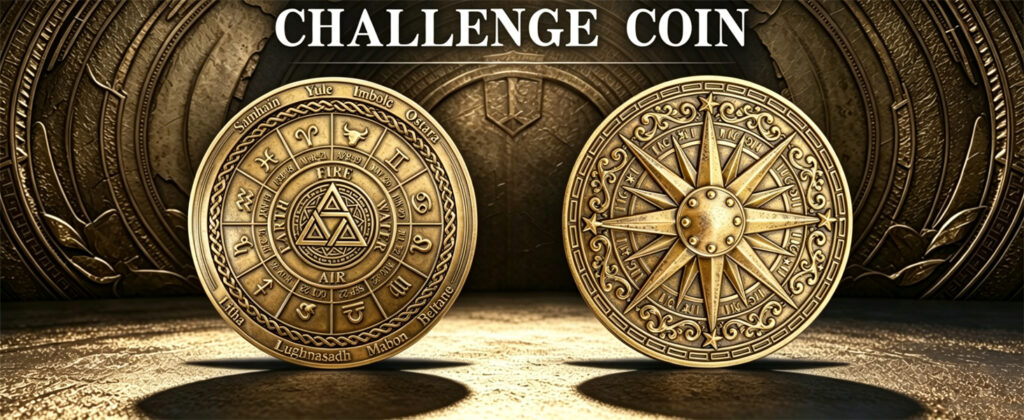
Challenge coins carry a different kind of weight. They are less about preservation and more about belonging. The tradition is often traced to military units, where a coin is given to recognize service, courage, or camaraderie. The rules vary, but the spirit is consistent: the coin is a token of respect, not a commodity. To receive one is to be told, without words, you are one of us.
“A challenge coin is not bought; it is earned. Its value is measured in memory, not market price.”
Modern challenge coins have expanded beyond the armed forces into police departments, firehouses, sports teams, and corporations. Designs are often custom, featuring unit insignia, mottoes, or symbols of shared mission. Collectors trade and display them, but the etiquette remains: a challenge coin should be carried, not hidden away. The coin is a conversation starter, a proof of experience, and a small piece of a larger brotherhood or sisterhood.
Sobriety Coins: Milestones in Recovery
Sobriety coins—also called sobriety chips or medallions—are perhaps the most intimate of the three. They are given in recovery communities to mark time without alcohol or drugs: 24 hours, 30 days, 60 days, one year, and beyond. The coin is small enough to fit in a pocket, yet it holds the weight of a thousand small decisions.
Unlike collectible coins, sobriety coins are not graded or appraised. Their value is entirely personal. A one-year medallion may be engraved with a serenity prayer, a favorite phrase, or a simple triangle of unity. Some people carry their chips as tactile reminders; others keep them on a nightstand or in a wallet. The coin becomes a physical anchor when cravings rise and motivation wavers.
• 24-hour chip
• 30/60/90-day tokens
• Annual medallions
• Custom recovery coins
The Common Thread: Meaning Made Tangible
Collectible coins, challenge coins, and sobriety coins are rarely found in the same display case, yet they share a quiet purpose. Each transforms a disc of metal into a vessel for story. The collector preserves the past; the unit member honors belonging; the person in recovery marks survival. In all three, the coin becomes a talisman—a small, durable object that says this mattered.
Whether you are sorting through inherited coins, designing a challenge coin for your team, or reaching for a sobriety chip on a difficult day, the lesson is the same: value is not only minted. It is remembered, earned, and carried.
Coins may be small, but the stories they hold are not.